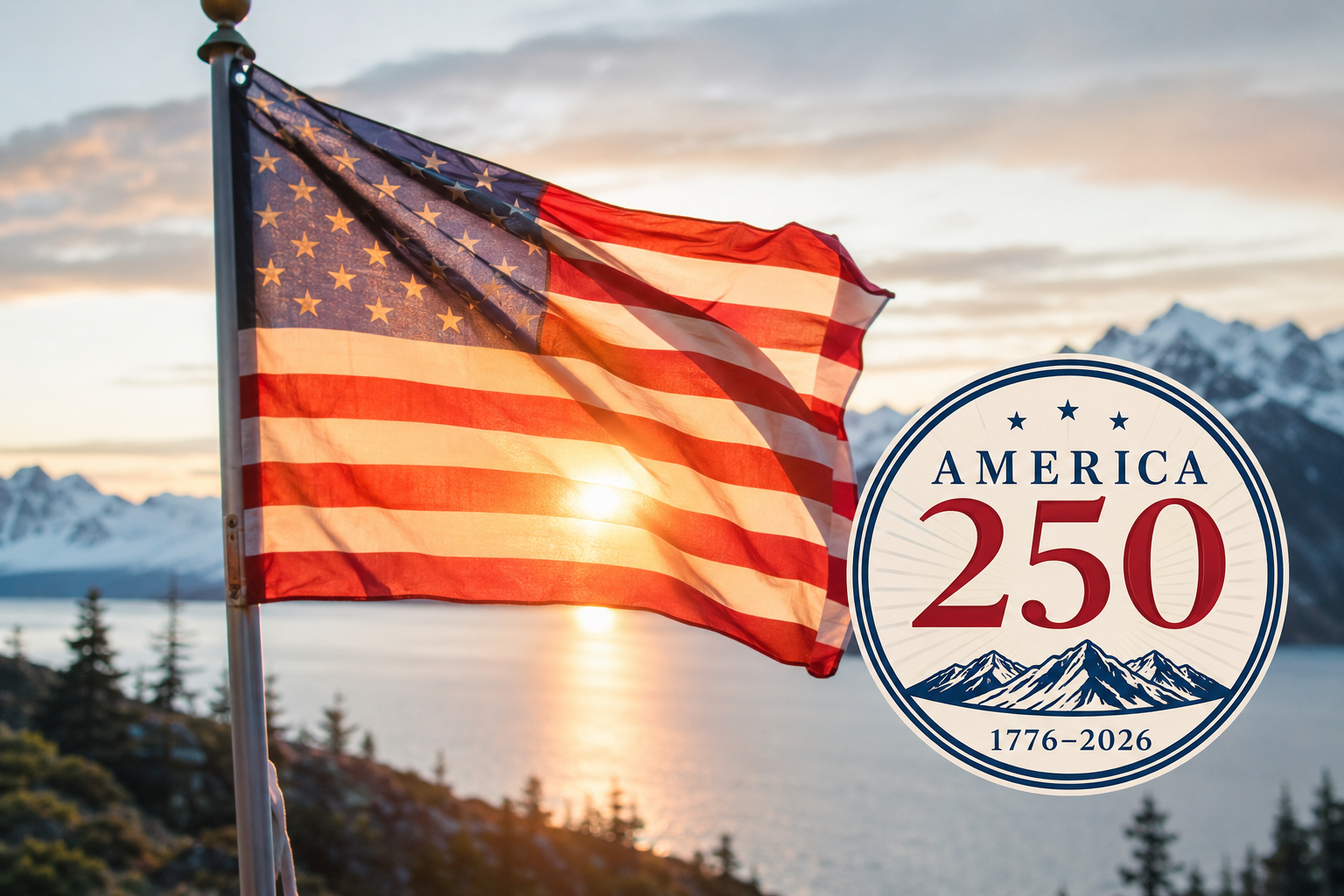
America 250 · Dermatology Breakthroughs
250 Years of America, The Decade That Remade Dermatology
As the nation celebrates its 250th birthday, dermatology is living through its own revolution. Here are the breakthroughs that have transformed skin care and patient lives, many of them firsts that did not exist just a few years ago.
Reviewed by Andrew S. Dorizas, MD and Blake Galler, DO, FAAD, Advanced Dermatology of Alaska · Wasilla · Anchorage · Juneau
July 3, 2026
This year, America turns 250. It is a moment to look back at how far we have come, and in dermatology, how far we have come is nothing short of astonishing. A decade ago, many of the conditions on this list had no targeted treatment at all. Patients were told to manage, to cope, to wait. Today, they have real options, and in many cases, the first treatments ever approved for their disease.
We put together this showcase to celebrate that progress, and to make sure our patients across Alaska know what is now possible. From diseases that finally have their first FDA-approved therapy, to a new generation of skin cancer treatment, to a wave of targeted medicines that work better and more safely than anything before them, this is the decade that remade our field. Here are the breakthroughs we are most excited about.
By the numbers
22 breakthroughs. 10 conditions or treatments that marked a first, including diseases that received their first-ever FDA-approved therapy and first-in-class medicines with brand-new mechanisms. 1 new sunscreen ingredient in over 25 years. And one field, dermatology, transformed.
Part 1: Firsts that changed everything
For decades, some skin diseases had no treatment designed specifically for them. Patients used borrowed therapies, off-label workarounds, or simply endured. In just the last several years, that changed. These conditions received their first-ever FDA-approved treatments, a genuine turning point for the patients who live with them.
Seborrheic dermatitis
One of the most common skin conditions finally has a treatment developed specifically for it. A new steroid-free topical foam earned the first FDA approval dedicated to seborrheic dermatitis, offering relief from the flaking, redness, and itch without the downsides of long-term steroid use.
Vitiligo
For the first time, there is an FDA-approved topical therapy that can actively help restore lost pigment in vitiligo, rather than just covering it. This is a landmark for a condition that affects appearance, confidence, and identity, and it gives patients a real path toward repigmentation.
Generalized pustular psoriasis (GPP)
GPP is a rare, serious, and sometimes life-threatening form of psoriasis. It now has its first FDA-approved treatment aimed directly at calming the dangerous flares that define it, a breakthrough for a population that previously had almost nothing.
Alopecia areata
For people experiencing significant hair loss from alopecia areata, the first FDA-approved systemic treatments have arrived. These oral medications can help regrow hair in cases that once had no proven option, changing the conversation for a deeply emotional condition.
Dystrophic epidermolysis bullosa (DEB)
DEB is a devastating genetic skin disease that causes severe fragility and blistering. The last few years brought its first FDA-approved therapies, including a groundbreaking topical gene therapy, an achievement that would have sounded like science fiction not long ago.
Chronic hand eczema
Chronic hand eczema can be stubborn, painful, and disabling for people whose work and daily life depend on their hands. It now has its first dedicated FDA-approved treatment, giving patients a targeted option instead of an endless cycle of workarounds.
Bullous pemphigoid
Bullous pemphigoid is a serious autoimmune blistering disease that mostly affects older adults, causing intense itch and painful blisters. It now has its first FDA-approved targeted medicine, a major step forward that can help reduce reliance on long courses of oral steroids in a vulnerable, often elderly population.
Clascoterone (for acne)
Acne treatment saw its first brand-new mechanism in roughly 40 years. Clascoterone is the first-in-class topical that targets the androgen receptors in the skin that drive oil production and breakouts, offering a hormone-directed option applied right where it is needed, for both teens and adults.
Tirbanibulin (for actinic keratoses)
For actinic keratoses, the rough precancerous spots caused by sun damage, tirbanibulin introduced a novel mechanism of action with one of the shortest treatment courses available, just five days. It is a meaningful upgrade for treating sun-damaged skin, which is especially relevant in a sun-exposed state like ours.
Part 2: A new era in skin cancer
Skin cancer is at the heart of what we do, and it is one of the areas where progress has been most dramatic. Advanced cases that were once nearly untreatable now have powerful options, and the gold-standard treatments keep getting better.
Immunotherapy for advanced melanoma
Perhaps the single most dramatic advance in this entire list. Immunotherapy, which unleashes the body's own immune system against cancer, has turned advanced melanoma from a frequently fatal diagnosis into one that many patients now survive. It is one of modern medicine's great success stories.
Immunotherapy for advanced squamous and basal cell carcinoma
The same immunotherapy revolution reached the most common skin cancers. Patients with advanced or hard-to-treat squamous cell and basal cell carcinomas, who once had very limited choices, now have systemic options that can produce remarkable results.
Mohs surgery and superficial radiotherapy
Mohs micrographic surgery remains the most precise, highest-cure-rate treatment for many skin cancers, and the technique keeps advancing. For appropriate patients who prefer a non-surgical path, image-guided superficial radiotherapy has expanded the options. We are proud to offer both right here in Alaska. Learn more about our skin cancer care and Mohs surgery.
Part 3: The targeted therapy revolution
If there is one theme that defines modern dermatology, it is this: medicine has learned to target the exact immune signals that drive disease, instead of broadly suppressing everything. The result is treatment that works better and is often safer. This precision revolution has reached condition after condition.
Atopic dermatitis (eczema)
Moderate-to-severe eczema, once managed mostly with steroids, now has biologic medications that target the specific pathways behind the itch and inflammation. Alongside them, a new generation of steroid-free topicals delivers strong results without the drawbacks of long-term steroid use. Patients are achieving clearer, calmer skin than ever before. Explore our eczema care.
Plaque psoriasis
Psoriasis treatment has been revolutionized by biologics that target precise immune signals (the IL-17 and IL-23 pathways), helping many patients reach nearly clear skin, a goal that was almost unthinkable a decade ago. Learn about our psoriasis treatment.
Icotrokinra, the first oral peptide in dermatology
This one is special. Icotrokinra is the first targeted oral peptide of its kind in dermatology, a once-daily pill that precisely blocks the IL-23 receptor to treat moderate-to-severe plaque psoriasis. It brings biologic-like results in pill form, a genuine new category of medicine.
Hidradenitis suppurativa (HS)
HS is a painful, chronic condition that was overlooked for far too long. Now it has FDA-approved biologic therapies that target its underlying inflammation, finally giving patients meaningful, lasting relief instead of just managing flares.
Prurigo nodularis
Prurigo nodularis causes intensely itchy, stubborn nodules that can be miserable to live with. It now has targeted FDA-approved treatment that addresses the root inflammation and itch, a major step for a condition that used to be extremely difficult to control.
Chronic spontaneous urticaria
For people with chronic hives that appear without warning and resist antihistamines, targeted therapies have expanded the options dramatically, helping calm an unpredictable and exhausting condition.
Steroid-free topical therapies
One of the most important shifts in everyday dermatology is the arrival of highly effective steroid-free topicals across conditions like eczema, seborrheic dermatitis, psoriasis, and vitiligo. For decades, topical steroids were the default, but long-term steroid use carries real downsides, including skin thinning, and these concerns matter even more in sensitive populations, especially children, where chronic steroid exposure is something we work hard to limit. The new generation of nonsteroidal creams and foams lets us calm inflammation effectively while moving away from chronic steroid reliance. For many families, this is a genuine relief and a safer long-term path.
Part 4: The rise of JAK inhibitors
One class of medicine deserves its own spotlight. JAK inhibitors, available as both pills and creams, have rapidly become one of the most important tools in dermatology. By blocking specific inflammatory signals inside cells, they have unlocked progress across an astonishing range of conditions, including alopecia areata, eczema, vitiligo, and more. Their arrival represents a fundamental expansion of what we can treat, and how precisely we can treat it. As with any powerful medication, they are used thoughtfully and with appropriate monitoring, matched to the right patient.
Part 5: Protecting skin before disease starts
Progress is not only about treating disease. It is also about preventing it, and the last few years delivered prevention milestones too.
Bemotrizinol
For the first time in more than 25 years, the FDA approved a brand-new sunscreen ingredient. Bemotrizinol offers broad-spectrum protection with especially strong coverage against the UVA rays linked to aging and skin cancer, a real upgrade for sun protection. Read our full guide to bemotrizinol and what it means for Alaska.
Niacinamide
Research has shown that nicotinamide, a form of vitamin B3, can help reduce the formation of certain non-melanoma skin cancers in higher-risk patients. It is an inexpensive, accessible adjunct that supports, but does not replace, daily sun protection. Always discuss with your dermatologist before starting.
Polypodium leucotomos
This oral fern extract has gained attention as a photoprotective supplement that may help support the skin's resilience against sun damage. It is an adjunct, not a substitute for sunscreen and sun-smart habits, but it reflects how prevention keeps evolving.
Why this matters for you, here in Alaska
Here is the honest truth about all of this progress: a breakthrough only helps if you can actually get it. And in Alaska, that is often the hard part. Many of these advanced medications come with real-world hurdles, complex insurance prior authorizations, step-therapy requirements, specialty pharmacy coordination, and approval processes that can be slow and frustrating. On top of that, our patients face challenges that most of the country does not: long travel distances to care, weather that can disrupt appointments and shipments, and dosing or follow-up schedules that have to account for getting to and from remote communities.
This is exactly where our practice focuses. We do not just know about these treatments, we specialize in the work of actually obtaining them for the right patient. That means building the clinical case for approval, handling prior authorizations and appeals, coordinating with specialty pharmacies, and designing dosing and follow-up plans that realistically fit Alaska life, your travel, your seasons, and your circumstances. We are experienced in getting these therapies approved for appropriate candidates, and in creating a personalized treatment plan that actually works for you rather than one that looks good on paper but stalls in the system.
If you live with one of these conditions, or you have been told in the past that there was nothing more to do, this is your encouragement to revisit that. The options today are dramatically better than they were even a few years ago. What was untreatable may now be treatable. What required harsh medicine may now have a gentler, more targeted path. And navigating the path to access these options is something we do every day.
Here is to the next 250 years
America's 250th birthday is a celebration of progress, resilience, and possibility. Dermatology's own decade of breakthroughs is a smaller version of that same story: problems that once seemed permanent giving way to solutions, and patients gaining options they never had before.
We are proud to bring this era of care to Alaska, and we are even more excited about what comes next. Happy birthday, America. Here is to healthier skin for the next 250 years.
Frequently asked questions
Many of these therapies, or the evaluation and management to access them, are part of routine dermatology care we provide. The best way to find out what is right for you is to schedule a visit, where we can discuss your specific condition and the current options.
It means that for the first time, the FDA has approved a medication specifically studied and indicated for that condition. Before such an approval, patients often relied on treatments borrowed from other diseases or used off-label. A first approval usually reflects strong clinical evidence and a meaningful new option.
Yes. This is exactly why we created this showcase. Several conditions that had no good options even a few years ago now have effective, FDA-approved treatments. It is well worth revisiting your options with a dermatologist.
Every medication has benefits and risks, and the right choice depends on your individual health, history, and condition. Many of these newer targeted therapies were designed to be more precise and, in many cases, better tolerated than older options. A dermatologist can help weigh what is appropriate for you, including any monitoring that may be recommended.
Absolutely yes. These are adjuncts that may offer added support, not replacements. Daily broad-spectrum sunscreen, protective clothing, and sun-smart habits remain the foundation of skin cancer prevention, especially in Alaska's long summer daylight.

Scan to revisit this page
Point your phone camera here to open this dermatology breakthroughs showcase anytime.
alaskadermatologist.com/blog/dermatology-breakthroughs-america-250Medical disclaimer
This article is for general educational purposes and is not medical advice. It describes advances in the field of dermatology and does not recommend any specific treatment for any individual. The availability and appropriateness of any therapy depend on your specific condition, health history, and an evaluation by a qualified clinician. Some treatments mentioned are for severe or specialized conditions and are not appropriate for everyone. Please consult a dermatology provider to discuss what is right for you.
Selected references
- U.S. Food and Drug Administration. New drug and biologic approvals in dermatology, 2021 to 2026. fda.gov.
- American Academy of Dermatology. "Advances in the treatment of psoriasis, eczema, vitiligo, and alopecia areata." aad.org.
- U.S. Food and Drug Administration. "Approval of icotrokinra (oral peptide) for plaque psoriasis." 2026.
- National Eczema Association; National Psoriasis Foundation; HS Foundation. Treatment updates.
- Journal of the American Academy of Dermatology. Reviews of immunotherapy, JAK inhibitors, and targeted biologics in dermatology.