
Medical Dermatology · Patient Guide
Hidradenitis Suppurativa (HS): Treatment Options and Where to Get Care in Alaska
What HS is, why early treatment matters, what the first joint treatment guidelines from the American Academy of Dermatology and the Hidradenitis Suppurativa Foundation recommend, and HS care at our Anchorage, Wasilla, and Juneau clinics.
By Advanced Dermatology of Alaska · November 15, 2026
Hidradenitis suppurativa, or HS, causes painful lumps that usually develop where skin touches skin, such as the armpits, inner thighs, and groin. The lumps can also appear on the buttocks or under the breasts. HS is not contagious, and it is not caused by unclean skin (American Academy of Dermatology).
HS affects about 0.7 to 1.5 percent of people worldwide, and it can cause substantial disability and lower quality of life (Journal of the American Academy of Dermatology). Yet many people live with HS for years before getting diagnosed (American Academy of Dermatology), often because it is confused with acne or an infection (American Academy of Dermatology). Our board-certified dermatologists and SDPA Dermatology Trained physician assistants diagnose and treat HS at our clinics in Anchorage, Wasilla, and Juneau.
What HS looks like
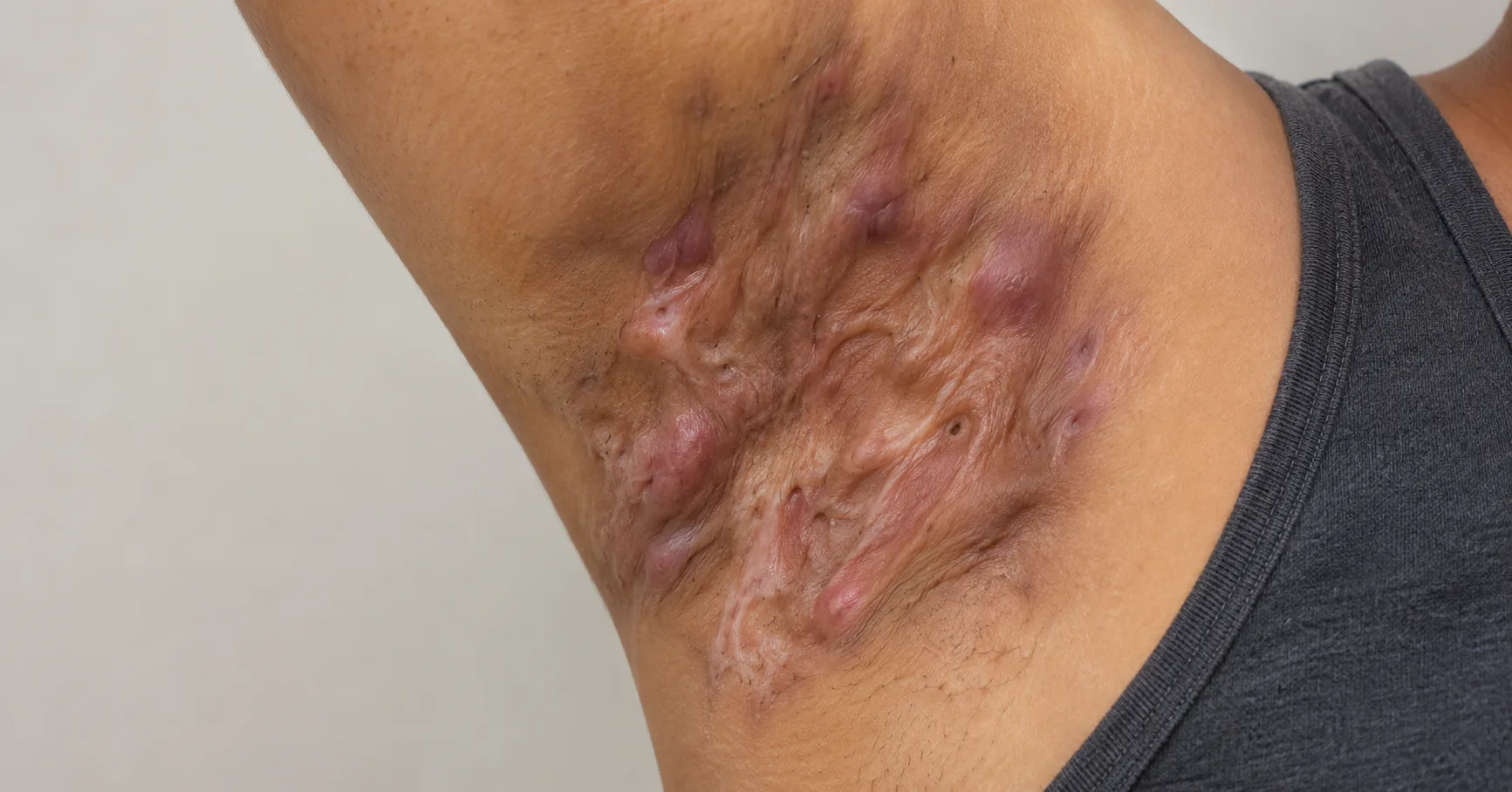
HS lumps often look like boils. Without treatment, HS can get worse, and abscesses can develop. As an abscess heals, a scar usually forms. If abscesses and scars keep appearing, pus-filled tunnels can form under the skin (American Academy of Dermatology).
At least three times as many women as men develop HS (American Academy of Dermatology).
Why early treatment matters
Getting treatment from a dermatologist before HS worsens can reduce flare-ups (American Academy of Dermatology). A board-certified dermatologist can identify HS and screen for medical and emotional health conditions that often come with it (American Academy of Dermatology). People with HS are more likely to develop arthritis, diabetes, and heart disease (American Academy of Dermatology).
What the new 2026 guidelines recommend
On October 20, 2026, the American Academy of Dermatology and the Hidradenitis Suppurativa Foundation published their first joint guidelines for treating HS, with 37 recommendations based on a systematic review of the research (Journal of the American Academy of Dermatology).
Strongly recommended
- Biologic medicines for moderate to severe HS: adalimumab, bimekizumab, infliximab, and secukinumab (Journal of the American Academy of Dermatology). Adalimumab and secukinumab are FDA-approved for HS in adults and teens 12 and older, and bimekizumab is FDA-approved for adults with HS (Healio).
- Routine pain assessment at your visits (Journal of the American Academy of Dermatology).
Also recommended, depending on your HS
- Medicines applied to the skin: clindamycin, resorcinol, and ruxolitinib.
- Medicines taken by mouth or by IV: antibiotics such as doxycycline, tetracycline, or clindamycin with rifampin; ertapenem by IV; spironolactone; upadacitinib; and short courses of corticosteroids.
- Procedures: deroofing, a minor procedure that opens and flattens tunnels under the skin; incision and drainage; surgical removal of affected skin; laser hair removal; botulinum toxin; and corticosteroid injections.
- Other steps: quitting tobacco, supportive pain management, zinc supplements, and vitamin D for people who are low.
Not recommended or not yet proven
The guidelines recommend against oral retinoids for HS. They found too little evidence to support birth control pills, finasteride, weight loss, or GLP-1 medicines as HS treatments (American Academy of Dermatology).
How we treat HS
Every plan is personal, and many people need a combination of treatments. At our clinics, HS care can include:
- Prescription medicines, including biologics, applied creams, and pills, based on the guidelines above. Biologics usually need approval from your insurance plan first, and our team works with your plan on these prior authorizations. Read our guide to prior authorization for dermatology medicines.
- Corticosteroid injections to calm a painful, inflamed lump.
- Laser hair removal at our Anchorage and Wasilla clinics, which the guidelines recommend for fewer flares (American Academy of Dermatology). Laser hair removal is not offered at our Juneau clinic.
- A plan for your pain, with regular check-ins about how HS is affecting your daily life.
If a procedure such as deroofing or surgery may help, your dermatologist will talk with you about the options.
Everyday steps that can help
- Quit tobacco. Quitting can help HS treatments work better (American Academy of Dermatology).
- Eat for your heart. No specific diet has been shown to help HS, but a heart-healthy diet is still encouraged because of the higher risk of heart disease and diabetes (American Academy of Dermatology).
- Do not squeeze or pick lumps. Call us instead, so we can treat a painful flare.
- Keep follow-up visits, even when your skin is calm, so we can adjust your plan.
HS care at our clinics
We treat HS at all three of our clinics. Same-week appointments are available, and we are in-network with all major insurance plans, commercial and government.
Anchorage
Our Anchorage clinic at 1100 E Dimond Blvd, Anchorage, AK 99515, offers HS treatment and laser hair removal, and serves patients from Eagle River, Chugiak, and the rest of the Anchorage area.
Wasilla, Palmer, and the Mat-Su Valley
Our Wasilla clinic at 3066 E Meridian Park Loop, Wasilla, AK 99654, offers HS treatment and laser hair removal, and serves patients from Palmer and across the Mat-Su Valley.
Juneau
Our Juneau clinic, inside Bartlett Regional Hospital Specialty Clinics at 3268 Hospital Drive, Juneau, AK 99801, offers HS treatment.
Learn more about HS evaluation and treatment at our Alaska clinics.
We are here to help
Living with painful lumps that keep coming back? Call us at (907) 267-5890 or request an appointment online.
Frequently asked questions

Scan to revisit this page
Point your phone camera here to reopen this guide anytime.
Medical disclaimer
This guide was prepared by the dermatology team at Advanced Dermatology of Alaska using information from the American Academy of Dermatology, the Joint American Academy of Dermatology and Hidradenitis Suppurativa Foundation guidelines, and medical news reports. This guide is for general education and does not replace individualized medical care. This page reflects information as of November 15, 2026. For advice about your own skin, contact your healthcare provider.
Selected references
- American Academy of Dermatology. Hidradenitis suppurativa: Overview. Updated October 20, 2026.
- Naik HB, Yeung H, Frazer-Green L, et al. Joint American Academy of Dermatology and Hidradenitis Suppurativa Foundation guidelines of care for the management of hidradenitis suppurativa. J Am Acad Dermatol. Published online October 20, 2026.
- American Academy of Dermatology. First joint guidelines of care for hidradenitis suppurativa issued by American Academy of Dermatology and Hidradenitis Suppurativa Foundation. October 20, 2026.
- Healio. Updated hidradenitis suppurativa guidelines recommend multiple biologics, JAK inhibitors. October 21, 2026.