
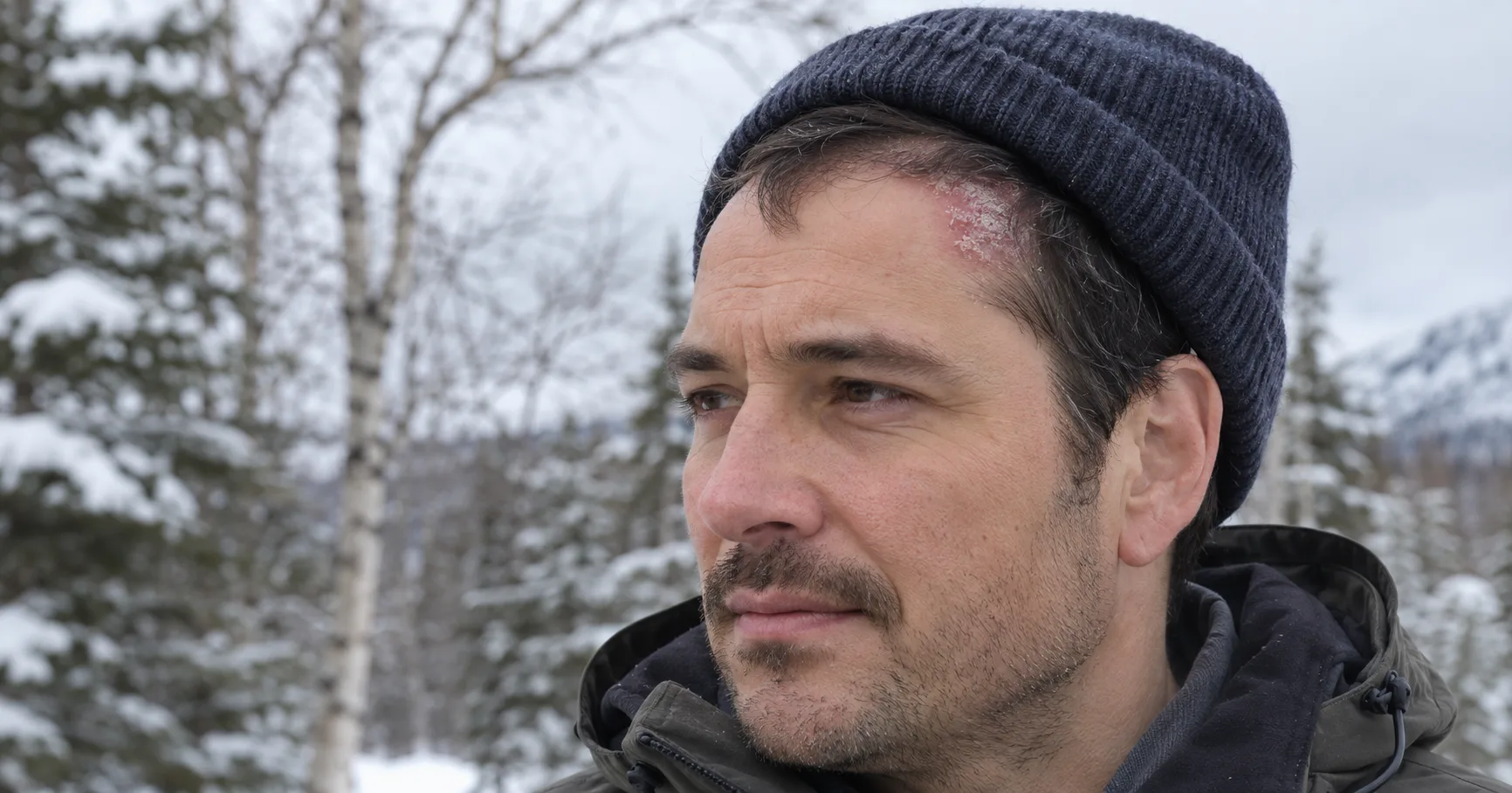
Psoriasis · Patient Guide
Psoriasis in Alaska: Winter Flares, Today's Treatments, and Where to Get Care
How Alaska's seasons can affect psoriasis, the treatments available today from creams to biologics, joint symptoms to watch for, and psoriasis care at our Anchorage, Wasilla, and Juneau clinics.
By Advanced Dermatology of Alaska · November 17, 2026
Psoriasis is common. It affects about 3 percent of adults in the United States, or more than 7.5 million adults (JAMA Dermatology). It can flare when the temperature and humidity drop, such as in the fall and winter (American Academy of Dermatology), which makes winter care especially important in Alaska.
Our board-certified dermatologists and SDPA Dermatology Trained physician assistants provide psoriasis treatment in Anchorage, Wasilla, and Juneau. This guide explains how Alaska's seasons can affect psoriasis, the treatments available today, the joint symptoms to watch for, and how to get care close to home.
Why psoriasis can flare in an Alaska winter
If your psoriasis gets worse when the humidity or temperature drops, such as in the fall or winter, the weather may be one of your triggers (American Academy of Dermatology). Alaska's long, cold winters, and dry heated air indoors, can make winter a hard season for psoriasis. Dermatologists recommend (American Academy of Dermatology):
- Moisturize right after bathing, using a fragrance-free ointment or cream rather than a lotion.
- Run a humidifier when the air in your home feels dry.
- Keep showers and baths to 10 minutes, using warm rather than hot water.
- Ask about light therapy. Ask your dermatologist whether phototherapy may be a treatment option for you in the winter.
For more on Alaska's dry indoor air, read our guide to dry skin and dry scalp in Alaska.
Summer in Alaska: protect your skin
Long summer days bring their own triggers. During warm weather, psoriasis can flare after a sunburn, and dermatologists recommend a broad-spectrum sunscreen with SPF 30 or higher (American Academy of Dermatology).
Psoriasis can also flare where your skin is injured, such as after a cut, scrape, sunburn, scratch, bruise, or bug bite (American Academy of Dermatology). In an Alaska summer, insect repellent and sun protection are part of psoriasis care.
Do not use tanning beds to treat psoriasis. Tanning beds and sun exposure can cause a sunburn that worsens psoriasis, and over time, ultraviolet light from the sun or tanning beds can cause skin cancer (American Academy of Dermatology).
Other common triggers
- Infections. Psoriasis can flare 2 to 6 weeks after strep throat, an earache, bronchitis, or another infection.
- Stress is a common trigger of psoriasis flares.
- Smoking, including time spent around people who smoke.
- Heavy drinking, which can make psoriasis treatment less effective.
- Some medicines, such as lithium and medicines taken to prevent malaria.
Source: American Academy of Dermatology
If you think a prescribed medicine is triggering your psoriasis, do not stop it on your own. Talk with the doctor who prescribed it.
Treatment options today
There is no one best treatment for psoriasis, and no one treatment works for everyone. Treatment can relieve symptoms like itching, help you see clearer skin, and keep psoriasis from getting worse. Your dermatologist builds a plan around the type of psoriasis you have, where it appears, how severe it is, how it affects your life, your other medical conditions, and the medicines you take (American Academy of Dermatology).
- Medicine applied to the skin. For mild psoriasis, this is often the only treatment needed. Options include corticosteroids, synthetic vitamin D, tazarotene, roflumilast cream or foam, and tapinarof cream (American Academy of Dermatology).
- Light therapy (phototherapy), used only under a dermatologist's supervision (American Academy of Dermatology).
- Pills, including apremilast, deucravacitinib, icotrokinra, methotrexate, cyclosporine, and acitretin (American Academy of Dermatology).
- Biologics and biosimilars. For many people whose psoriasis has not responded to other treatments, a biologic is life-changing. A biosimilar is very similar to a biologic but may cost less (American Academy of Dermatology).
Biologics and life in Alaska
A biologic is an important treatment option for people with moderate to severe psoriasis, psoriatic arthritis, or both (American Academy of Dermatology). Here is what to know:
- How often: depending on the medicine, doses range from twice a week to once every three months (American Academy of Dermatology).
- Where: many biologics are shots you can learn to give yourself at home. One, infliximab, is given by IV at a doctor's office or infusion center (American Academy of Dermatology).
- Before you start: blood tests and tuberculosis (TB) testing are typically required (American Academy of Dermatology).
- Staying safe: anyone taking a biologic has a higher risk of a serious infection, and some vaccines should not be given during treatment. Call your dermatologist before getting a flu shot or any other vaccine (American Academy of Dermatology).
For patients who live far from a clinic, a medicine taken at home every few weeks or months can mean fewer trips. Biologics usually need approval from your insurance plan first, and our team works with your plan on these prior authorizations. Read our guide to prior authorization for dermatology medicines.
Watch your joints
About 30 percent of people with psoriasis develop psoriatic arthritis, and left untreated, it may lead to permanent joint damage (National Psoriasis Foundation). Tell your dermatologist if you notice:
- Pain, swelling, or stiffness in one or more joints
- Joints that are red or warm to the touch
- Sausage-like swelling in a finger or toe
- Pain in and around your feet and ankles
- Nail changes, such as pitting or a nail separating from the nail bed
- Pain in your lower back, above the tailbone
Source: National Psoriasis Foundation
Psoriatic arthritis is typically diagnosed and treated by a rheumatologist (National Psoriasis Foundation). A biologic can relieve joint pain, stiffness, and swelling as well as skin symptoms (American Academy of Dermatology), and we will help coordinate your care.
Psoriasis and your overall health
High blood pressure and diabetes are more common in people with psoriasis, so your follow-up visits are also a chance to review your risk (American Academy of Dermatology). Keep your primary care provider in the loop, too.
Where to get psoriasis care in Alaska
We treat psoriasis at all three of our clinics, for patients of every age. Same-week appointments are available, and we are in-network with all major insurance plans, commercial and government.
Anchorage
Our Anchorage clinic at 1100 E Dimond Blvd, Anchorage, AK 99515, serves patients from Eagle River, Chugiak, Joint Base Elmendorf-Richardson, and the rest of the Anchorage area.
Wasilla, Palmer, and the Mat-Su Valley
Our Wasilla clinic at 3066 E Meridian Park Loop, Wasilla, AK 99654, serves patients from Palmer and across the Mat-Su Valley.
Juneau
Our Juneau clinic is inside Bartlett Regional Hospital Specialty Clinics at 3268 Hospital Drive, Juneau, AK 99801, and serves patients from across Southeast Alaska.
Learn more about our psoriasis treatment in Anchorage, Wasilla, and Juneau.
We are here to help
Ready for clearer skin? Call us at (907) 267-5890 or request an appointment online.
Frequently asked questions

Scan to revisit this page
Point your phone camera here to reopen this guide anytime.
Medical disclaimer
This guide was prepared by the dermatology team at Advanced Dermatology of Alaska using information from the American Academy of Dermatology, the National Psoriasis Foundation, and peer-reviewed medical research. This guide is for general education and does not replace individualized medical care. This page reflects information as of November 17, 2026. For advice about your own skin, contact your healthcare provider.
Selected references
- Armstrong AW, Mehta MD, Schupp CW, Gondo GC, Bell SJ, Griffiths CEM. Psoriasis prevalence in adults in the United States. JAMA Dermatol. 2021;157(8):940-946.
- American Academy of Dermatology. Are triggers causing your psoriasis flare-ups?
- American Academy of Dermatology. Psoriasis: Diagnosis and treatment. Updated May 22, 2026.
- American Academy of Dermatology. Psoriasis treatment: Biologics. Updated July 13, 2026.
- National Psoriasis Foundation. Are you at risk for psoriatic arthritis? Updated December 22, 2022.